- Kongs are worth gathering to gain extra points and prevent opponents from the option to get certain tiles.
Chow
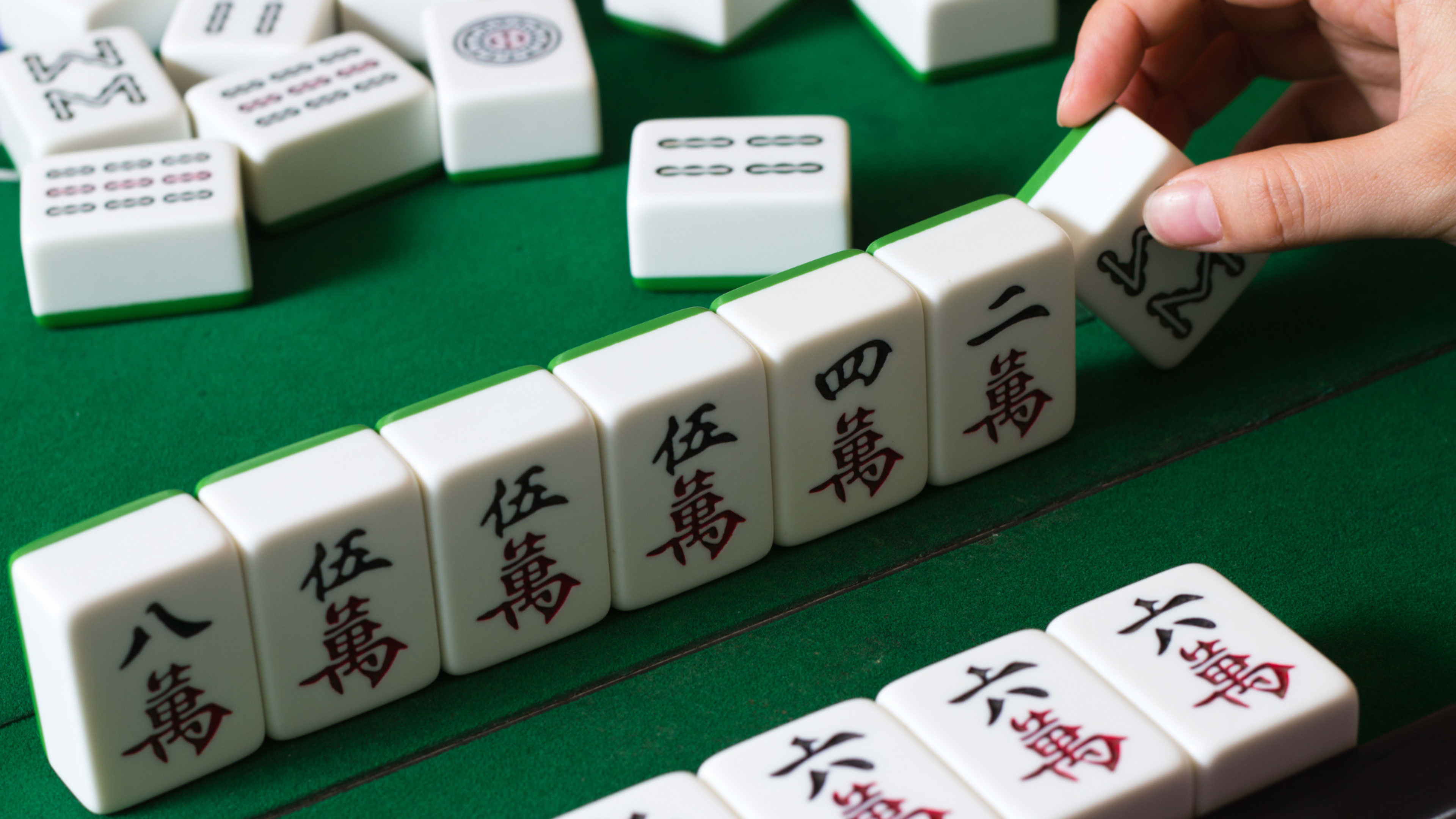
- A chow is created by melding three matching tiles in a row.
- The meld needs to be in the same suit and in exact numerical order.
- Players cannot skip numbers or meld from 8 or 9 to 1 or 2.
- Because they have no numerical value, honor tiles and bonus tiles cannot be utilized to create chows.
- Only the player whose turn came just before their own can steal a discard to build a chow. The person who forms a chow with a seized piece gets the lowest priority for that tile.
- Any other player may take control of that tile in place of the other player if they need it to produce a pong or a kong to win.
- The chow is either hidden or visible, like a pong.
Eyes
Eyes, also known as a pair, are two identical tiles essential to a lawful winning hand. A piece cannot be taken to create a pair of eyes unless the player concurrently completes a valid winning hand.
Interruption of Play
The game can be interrupted by four events. They are the following:
Flower or Season
The last tile of the wall is drawn as a replacement tile whenever a player draws a flower or season, ensuring that they have the 14 pieces required before their discard.
Melding Another Player’s Discard
Other players may take a tile that has been discarded by one player to finish a meld. The advantages of stealing tiles include constructing a winning hand more quickly and earning extra points. At the same time, the drawbacks include having to expose a portion of one's hand to other players and being unable to alter a declared meld.
Moreover, the player must specify the type of meld to be proclaimed when declaring it through a discard before exposing the meld by setting the three or four face-up tiles.
Winning A Hand
Play is stopped when a hand is won in order to evaluate the hand's viability. Following confirmation, the player receives the hand's worth in accordance with the rules of the particular game.
Winning a Hand From a Discard
A player declares victory and reveals their winning hand if, at any time throughout the game, they can utilize another player's discard to finish a legal hand. The hand is over at this point, and mahjong scoring starts.
Based on established table rules, there are several methods to handle the scenario if more than one player can utilize a discard to win the hand. The winner may be determined by adding up the points each player would have gained from the discard, selecting the person who is closest to the discarder in turn order, or concurrently awarding wins to many players.
Winning a Hand From the Wall
A player can also succeed by drawing a tile that finishes a valid hand. This can also be referred to as winning from the wall. Winning from the wall in Hong Kong Mahjong doubles the basic points that each loser must pay.
Winning a Hand By False Win
The declaring of a winning hand is technically permissible at any time. The player must have a full and legitimate hand, though. If not, the player is punished.
- The punishment is based on the table rules.
- The player can hand the other players their points back.
- The player who announces the fake win is also subject to a potential punishment of having to play the remainder of the hand with their tiles face up.
- Some strategies impose punishment at the conclusion of the whole contest.
Robbing a Kong
A play known as robbing the kong is an uncommon yet high-scoring element of Hong Kong mahjong. If a player attempts to declare a kong by adding a fourth piece to a melded pong, but another player can use that piece to finish the hand, the winning player has precedence and may remove that piece from the person who was attempting to declare the kong.
Conclusion
Playing Mahjong is not about just learning the rules or tiles. Knowing about the melds, how to make them, and the different types of melds in mahjong is necessary in order to have a successful game.
Mahjong is not as difficult as it seems. It's just there is so much to learn about the game. But when players have a whole understanding, they undoubtedly have fun.
FAQ
What exactly constitutes a meld in Mahjong?
In Mahjong, a meld refers to specific combinations of tiles. These combinations, which can take three different forms, each have a unique name depending on how they are formed during the game.
What defines a melded hand in Mahjong?
A melded hand in Mahjong consists of four melded sets and a pair. This means that each set or pair in the player's hand includes at least one tile that was picked up after being discarded by another player.
In Mahjong, what are Pong and Chow?
In the context of Mahjong, a Pong refers to a set of three identical tiles of the same rank and suit. A Chow, on the other hand, is a sequence of three consecutive tiles within the same suit.